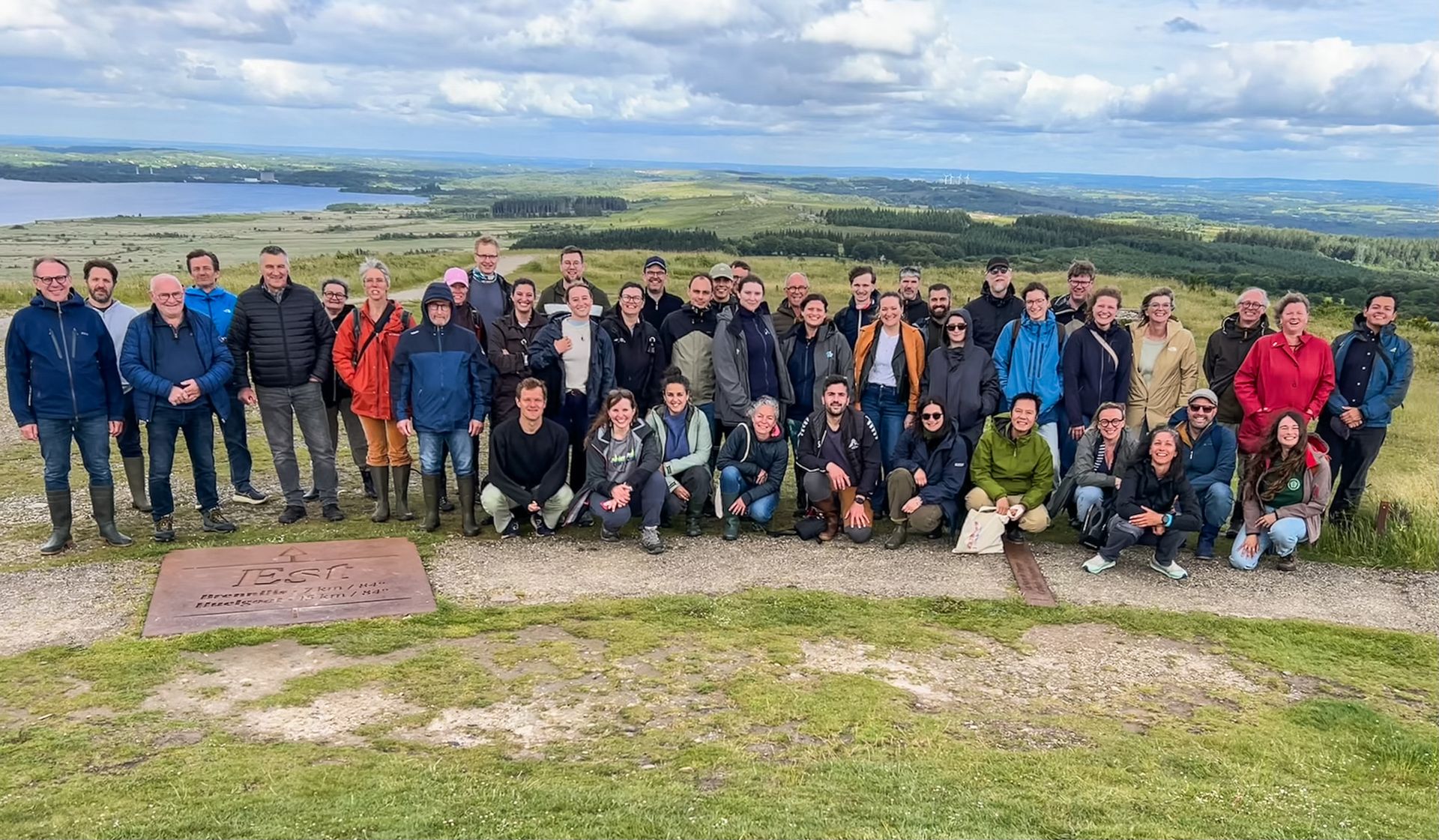
In Spring 2026, the BUFFER+ consortium gathered in Brittany, France, for its first partner meeting of the year, hosted by the Association of the Chambers of Agriculture of the Atlantic Area (AC3A). Over two days, partners from across Europe combined field visits, expert presentations, and interactive workshops to explore how sustainable agriculture, peatland restoration, climate resilience, and community engagement can support resilient landscapes across North-West Europe.
A day in the field
The meeting opened with a field programme in the Monts d’Arrée region, providing partners with the opportunity to explore the close relationship between agriculture, peatland conservation, and landscape management in practice.
The first visit took the consortium to GAEC des Landes Celtes in Loqueffret, where cattle breeder Jeremy Stephan introduced his organic farming practices and short supply chain approach. Discussions focused on the opportunities and challenges of livestock farming in peatland-rich landscapes and the role of farmers in maintaining sustainable rural economies.
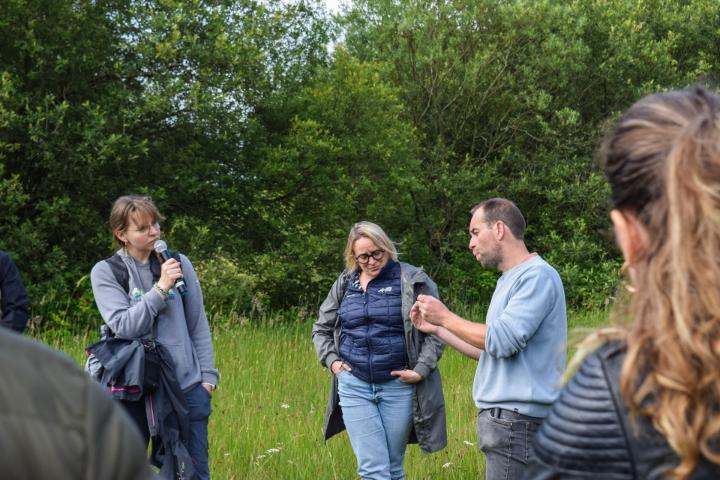
The group then travelled to the Venec peatbog, guided by Emmanuel Holder from Bretagne Vivante. At this unique peatland site, partners gained valuable insights into the ecological importance of peatland ecosystems, their contribution to biodiversity conservation, and their role in supporting climate resilience in Brittany.
After a traditional Breton lunch at Gwernandour Farm, where participants also met local beekeepers involved in BUFFER+ bee monitoring activities, the field programme continued through the Monts d’Arrée landscape. Dairy farmer Daniel Marhic welcomed the consortium to Roch Trédudon in La Feuillée, sharing his experiences of farming within wet heathland environments and highlighting the importance of balancing productive land use with environmental stewardship.
The afternoon also included a visit to the source of the Ellez River with Yves-Marie Le Guen from the Parc Naturel Régional d’Armorique. Here, partners learned about the strong connections between healthy peatlands, water management, and ecosystem services within one of Brittany’s most important biodiversity areas.
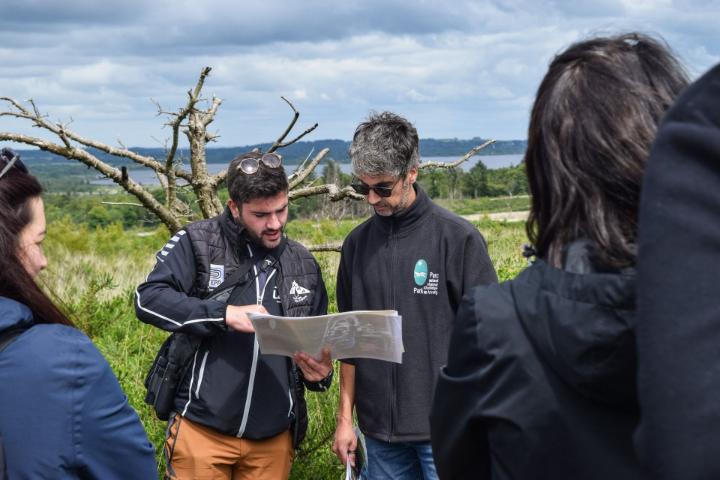
The final field visit brought the group to a Black Angus farm, where Myriam and Sylvain Le Treust presented their sustainable approach to land management. With extensive heathland and peat bog habitats forming part of their farm, the visit offered another practical example of how agricultural production and nature conservation can work hand in hand.
To conclude the day, partners climbed the iconic Mont Saint-Michel de Brasparts, taking in panoramic views across the Monts d’Arrée and reflecting on the landscapes, farms, and ecosystems they had explored together. The evening continued in the historic village of Locronan before a shared dinner, opened by Jean-Alain Divanach, farmer and President of the Chambres d’Agriculture Finistère, who shared his perspectives on the future of agriculture and rural landscapes in the region.
Workshops and presentations
The second day focused on knowledge exchange, collaboration, and exploring practical tools that can support climate action and sustainable land management.
Following a welcome by AC3A Team Lead Alexandre Morin, Raphaël Vendé from WWF introduced the Interreg NWE WETLANDERS project. His presentation highlighted how cooperation between regions can accelerate wetland restoration efforts and strengthen climate adaptation across North-West Europe.
The morning continued with an interactive workshop on extensive livestock farming in peatland areas, delivered by BEEODIVERSITY, AC3A, and the Chambre d’Agriculture de Bretagne. Using the Beeodiversity Model Canvas, participants explored how extensive grazing systems can contribute to biodiversity enhancement, climate resilience, and sustainable land management while creating opportunities for local farmers.
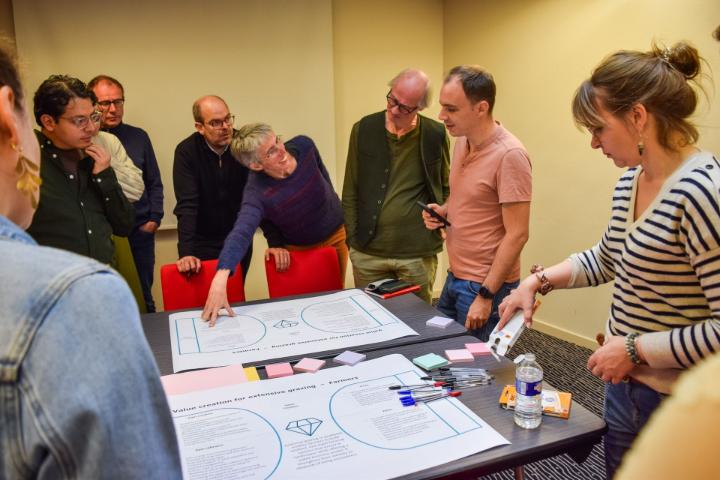
Governance and regional cooperation were central themes throughout the programme. In a workshop facilitated by Joke Brüning from Marburg University and Aikaterini Meliou from Hanze University of Applied Sciences, participants reflected on governance experiences from their own regions and identified ways to adapt successful approaches in different local contexts. The session encouraged knowledge sharing and highlighted the importance of flexible governance models for addressing complex environmental challenges.
The focus then shifted from landscapes to people during the workshop From Soil to Story: Growing Roots of Engagement!, led by Iris Planting from the Province of Groningen. Using peat-free potting soil as a practical example, participants explored how storytelling can help connect consumers, communities, stakeholders, and policymakers to peatland restoration and climate action. The workshop demonstrated the value of communication and public engagement in building wider support for sustainable land-use transitions.
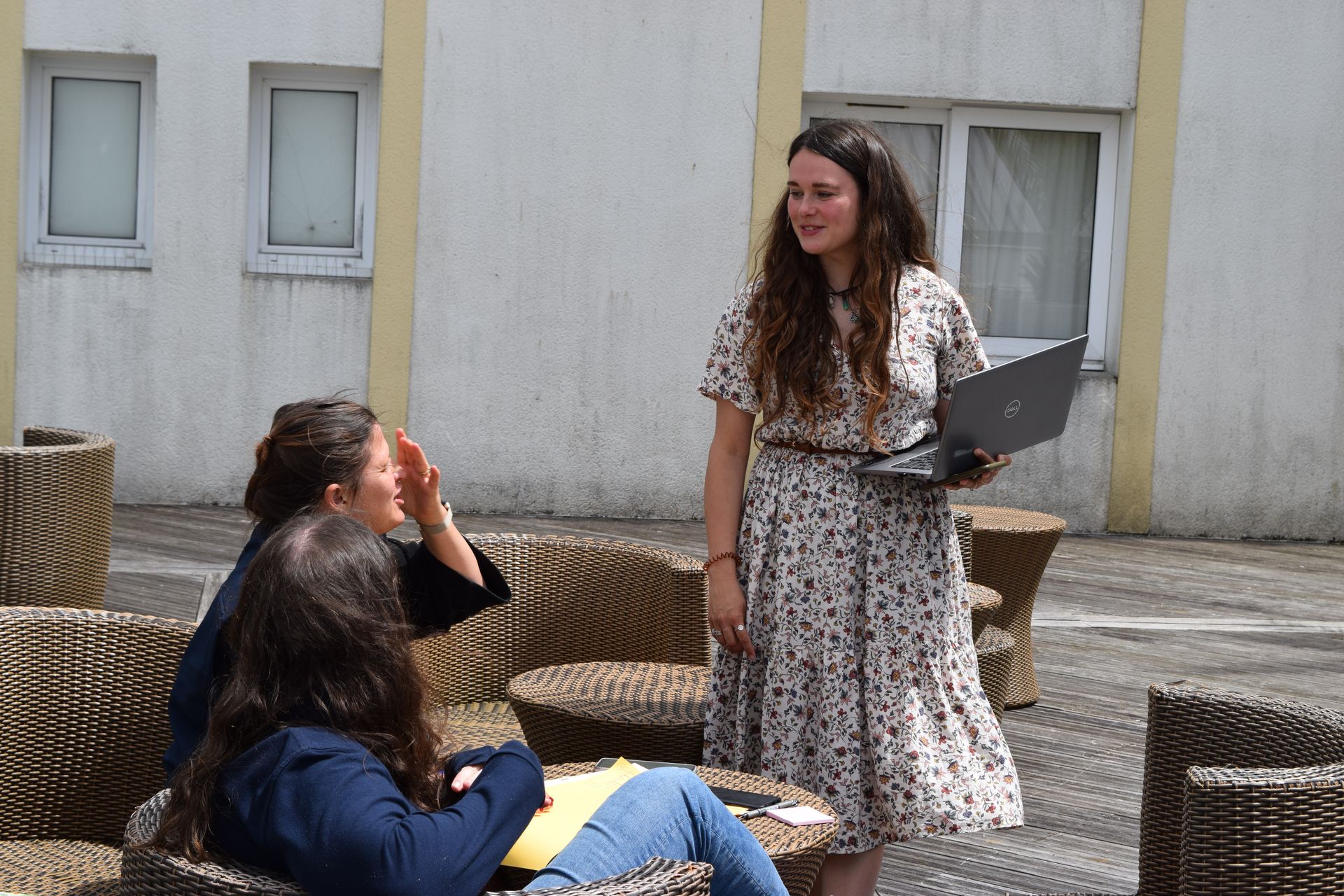
To conclude the programme, partners participated in the serious game Common Ground: Building Trust for Climate Solutions. Through role-playing and collaborative decision-making exercises, participants experienced the challenges and opportunities involved in bringing together diverse interests within shared landscapes and worked towards developing common solutions for climate resilience.
From farm visits and peatland excursions to governance discussions and engagement workshops, the BUFFER+ partner meeting in Brittany demonstrated that restoring peatlands and building resilient landscapes requires collaboration across sectors, disciplines, and communities. The consortium extends its sincere thanks to all speakers, workshop facilitators, farmers, and partners for their valuable contributions, and especially to AC3A for organising an inspiring and productive meeting in Brittany.