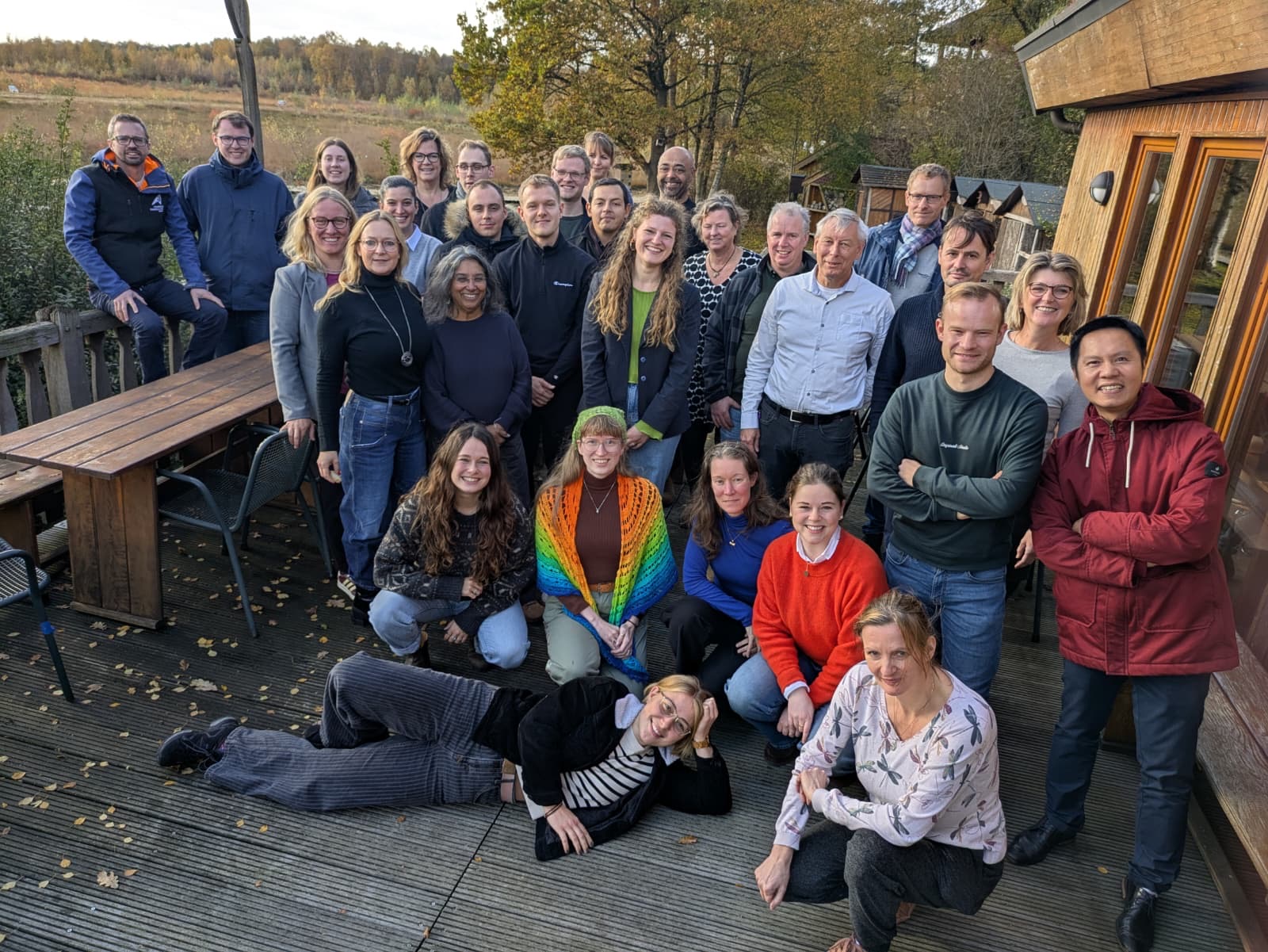
In Autumn 2025, the BUFFER+ consortium came together in Lower Saxony, Germany, for its second partner meeting of the year 2025, hosted by the University of Vechta. Over several days, partners from across Europe combined field visits, expert inputs, and collaborative workshops to explore how peatland restoration, climate action, innovation, and governance can be effectively linked in practice.
A day in the field
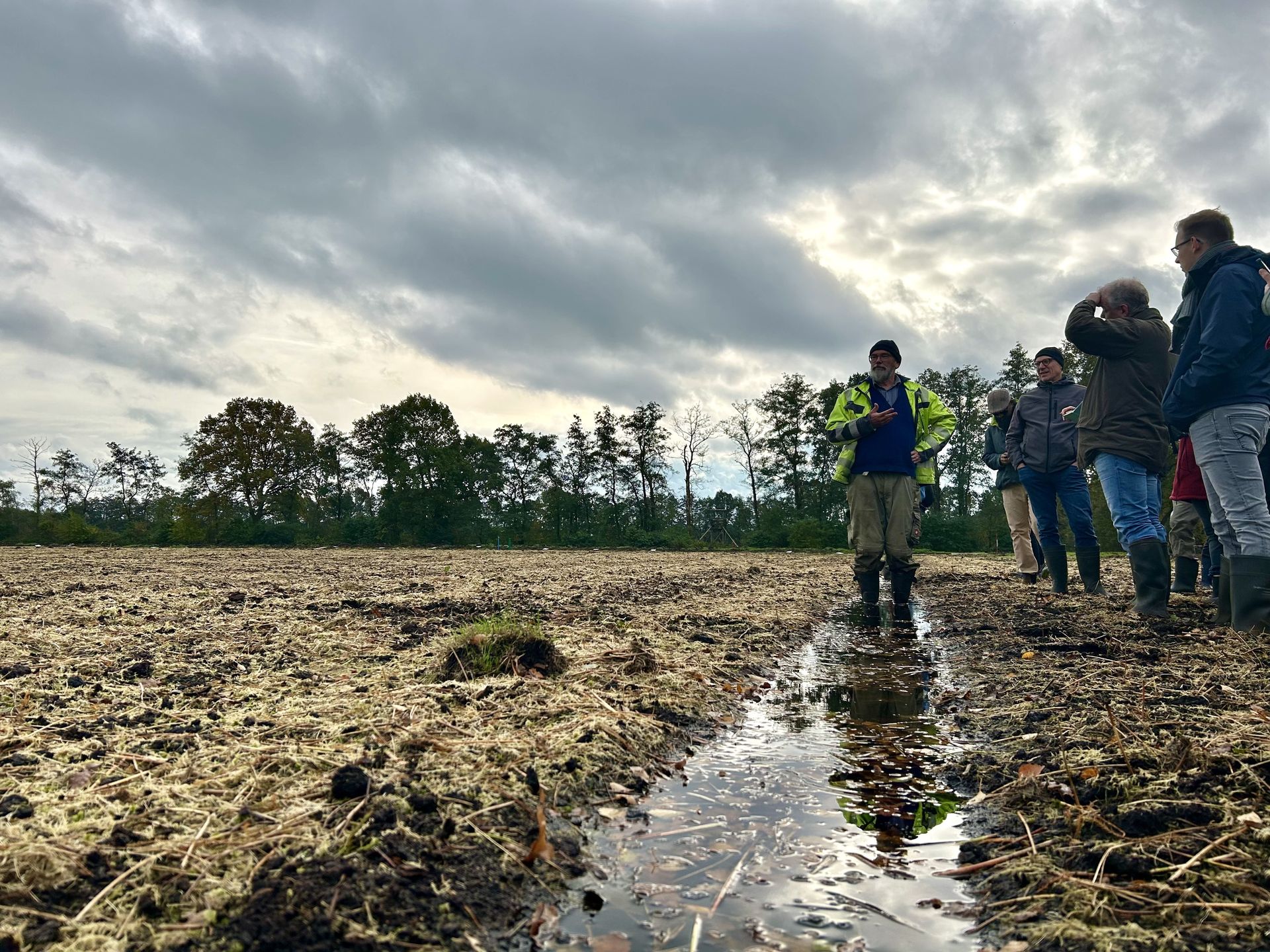
The meeting opened with a field-based programme focused on real-world examples of sustainable peatland use. Partners visited the MOOSland testing site to experience paludiculture firsthand, where the University of Greifswald and regional partners are pioneering the cultivation of sphagnum moss as a renewable raw material. This climate-friendly alternative to peat demonstrates how restored peatlands can contribute to emission reduction while creating new economic opportunities. The group then continued to the European Moor and Climate Competence Centre in Wagenfeld-Ströhen, exploring the MOORWELTEN exhibition and gaining insights into biodiversity, education, and the role of tourism in peatland conservation.
In the evening, partners gathered at the University of Vechta for a screening of the documentary Mission to Marsh. Filmmaker Alexander Kornelsen joined the discussion, sharing stories from wetland ecosystems around the world and highlighting the power of storytelling to raise awareness and inspire global action on peatland restoration.
Workshops and presentations
The following day, the meeting continued at Haus im Moor in the Goldenstedter Moor, with a strong focus on innovation, governance, and capacity-building. After a warm welcome and introduction to Haus im Moor, keynote speaker Bernhard Aumann (tgo AG) presented technological innovations in sustainable land use and carbon farming, illustrating how cutting-edge solutions can support practical restoration efforts. The University of Vechta then shared experiences in developing sustainable business models for peatland regions, translating research into viable practices for local communities.
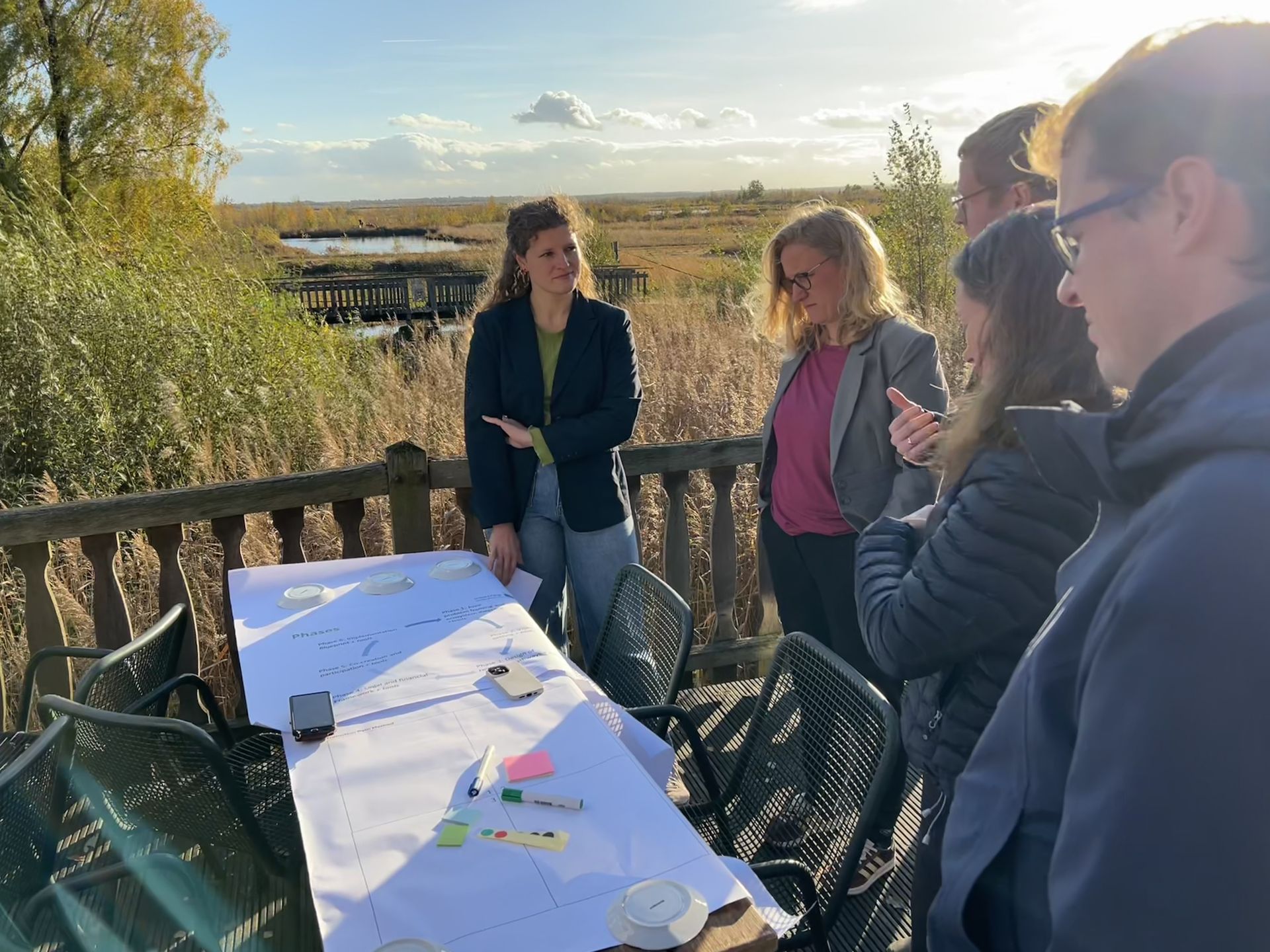
Governance and collaboration were at the heart of the morning programme, with a workshop on improved governance models led by partners from Marburg University and Hanze. Together, participants worked on templates to strengthen cooperation and policy alignment across regions. In the afternoon, a Train-the-Trainer session delivered by the Association of the Chambers of Agriculture of the Atlantic Area (AC3A) focused on capacity-building and knowledge transfer, using excursions to Dutch farmers—hosted by partners from Groningen—as a practical case study.
From field insights to policy discussions and skills development, the BUFFER+ partner meeting in Lower Saxony highlighted that successful peatland restoration depends on innovation, strong governance, and engaged communities. The consortium extends its sincere thanks to all partners for their active contributions, and in particular to the University of Vechta for organising the meeting and to Haus im Moor for hosting such an inspiring and productive day.