
On Friday, November 14th, Hanze University of Applied Sciences, the University of Vechta, the Municipality of Westerkwartier, and the Municipality of Midden-Groningen, in collaboration with the Dutch agricultural school DC Terra, organized a Young Farmer Event. A group of one hundred students visited two dairy and arable farms in Jade, Germany.
Excursion to Jade
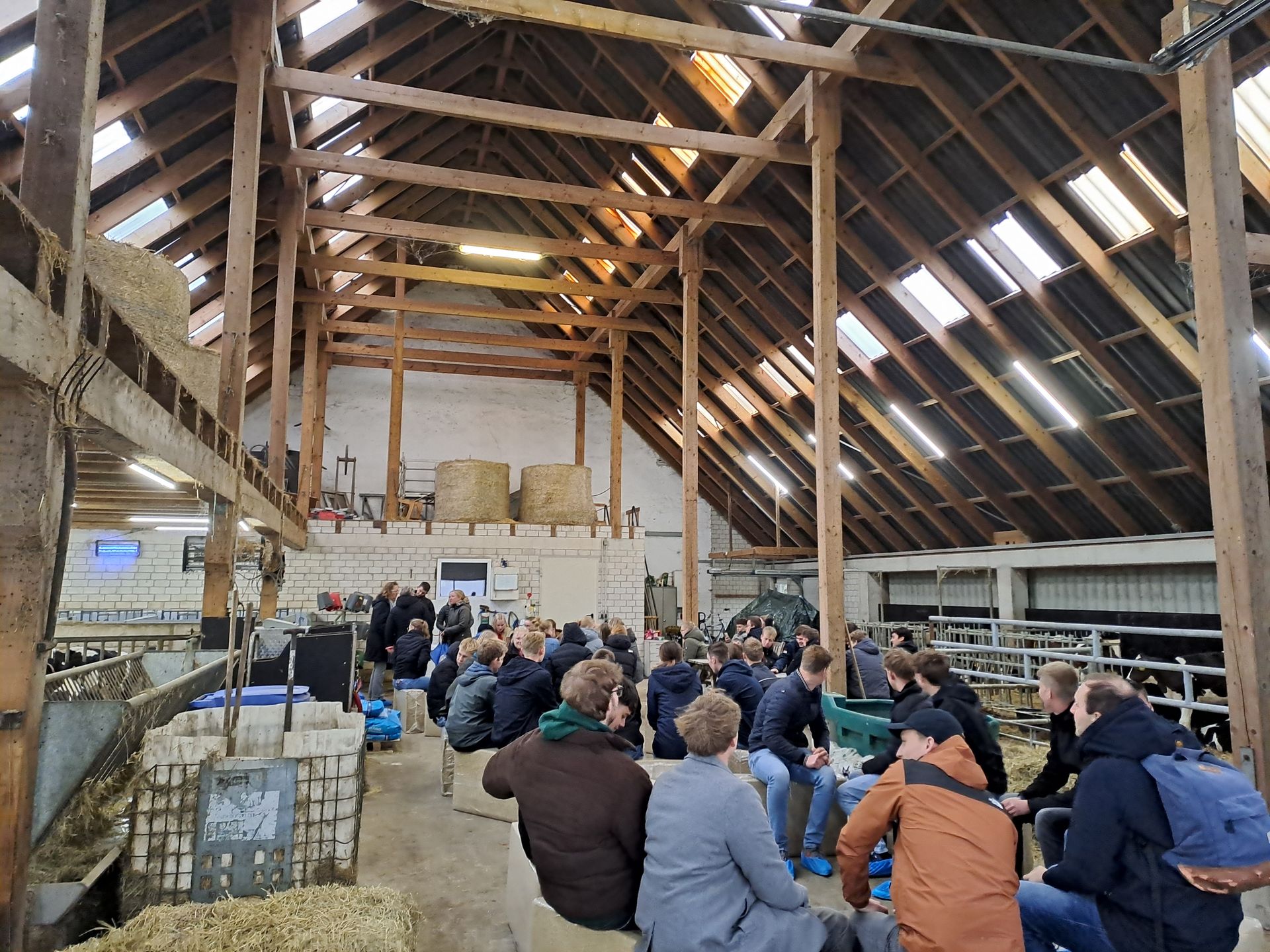
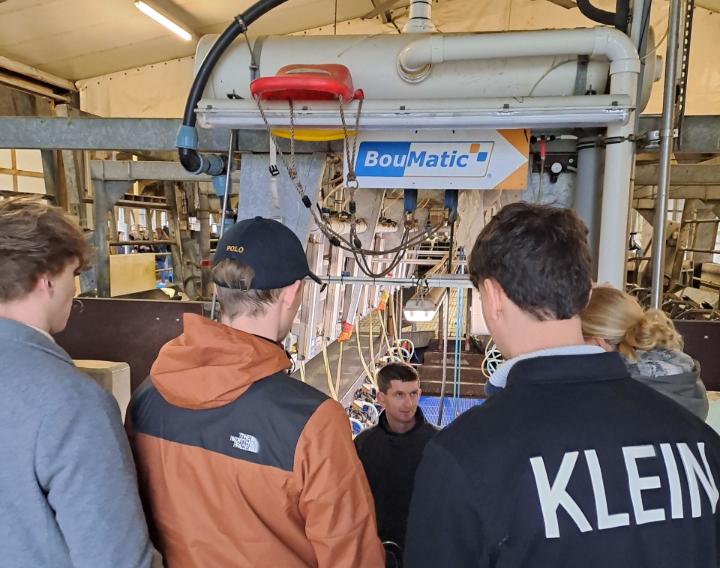
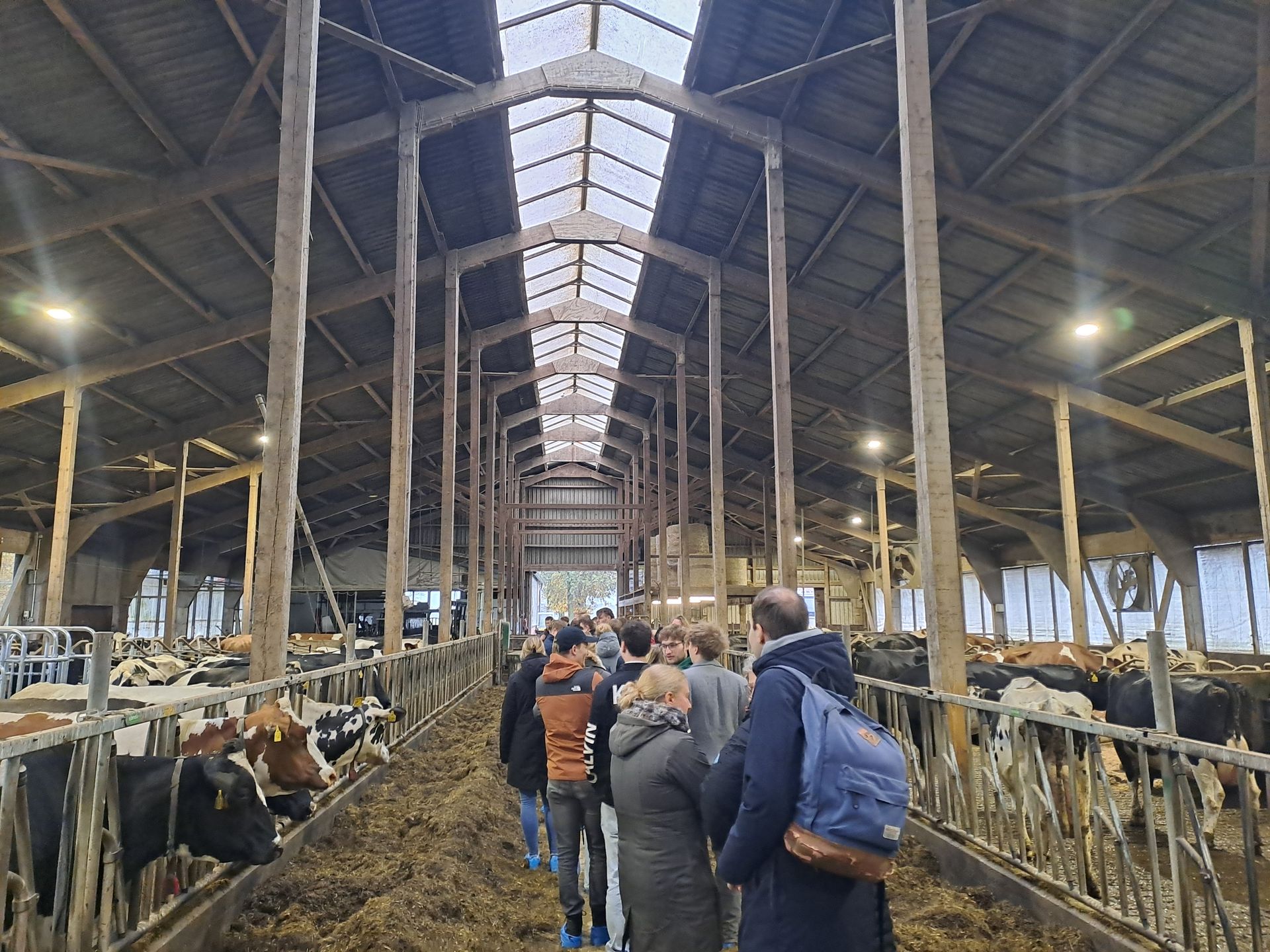
Students from DC Terra’s livestock farming program and the University of Vechta’s Social Entrepreneurship modul were welcomed on the farms of Family Van Velzen-Hekert and Boersma. The day started in two big busses, where there was plenty of time to prepare fort he visit and to present the BUFFER+ project. Arriving in Jade, the group split in two, alternating the farm-visits. Once at the farm the group got a tour of the farm, through the stables, milking alleys and past young cattle. During the tour students had the opportunity to ask questions and engage directly with the farmers. This international collaboration fostered a valuable exchange of knowledge, offering future farmers insights into peatland agriculture, sustainable entrepreneurship, circular farming practices, and the complex interplay of soil and water management in combination with dairy and crop production.
Meet the farmers
The farm of Family Van Velzen-Hekert is a cattle farm in a grass- and marsh-landscape. The company has approximately180 cows and 220 young cattle for whom a strategy of sustainability and longevity of life is adopted. The farm grows the cow feed on 143ha of grassland and 17 ha of cornfields. The region is located in marshy lands and former-peatlands and a strong focus is on the soil structure and carrying where a combination of mowing and grazing is applied.
The farm of family Boersma is a cattle farm with Jersey cows. These cows are fully pasture grazed. This approach is suitable for wet and peaty soils as the Jersey cows are quite light compared to other cow breeds. Furthermore, permanent grasslands are present, where soil cultivation is kept at a minimum. Additionally, the use of heavy machinery is limited, as they have a negative impact on the soil and cannot always access the lands. This business case makes the business efficient with low costs and high self-sufficiency.
The two farmers who hosted the visits had emigrated from the Netherlands and shared their personal stories of moving to Germany to pursue farming. One of the key reasons for their relocation was the significantly lower cost of agricultural land in Germany at the time of purchase.
Farming on peatlands
Both farms are partialy located on peatlands, meaning they have to adapt to these preconditions. Although more difficult than with other soils, they use peatland areas for permanent grassland in order to secrure a secure and reliable fed source for their cattle while simultaneously reducing emissions and contributing to climate goals. The region Jade became part of the Niedersächsische Moordlandschaften-program. Furthermore, peatlands are legally specified as ‘carbon-rich soils with a special protection. Since 2024 the GLÖZ 2 regulation applies to wetland and marshland, which prohibits soil cultivation deeper than 30 cm, states that permanent grasslands on peat soils may not be converted to arable land, puts restrictions on soil disturbence and heavy machinery and requires permits for drainage and dewatering. This with the goal to preserve organic matter, reduce CO2 emissions and reduce land subsidence.
Conclusion of the day
By visiting these farms the students, and future farmers, increased their understanding on the possibilities of having a farm on peatlands. The business case of both farmers is rooted in sustainable dairy farming on peatlands. These farmers show that they can still grow feed for their cattle while simultaneously helping to preserve peatlands and contributing to climate goals. Their businessmodel combines economic viability with environmental responsibility: leveraging affordable land acquisition, focusing on dairy production as a stable revenue stream, and integrating circular practices that align with long-term sustainability.