
Which business models that are compatible with healthy peatlands have the greatest potential for the future? In which regions of North-West Europe can these business models find fertile ground or, conversely, encounter significant barriers? Building on their “feasibility study for sustainable value chains in peatlands”, BUFFER+ partners created summary sheets that provide an opportunity to answer these questions.
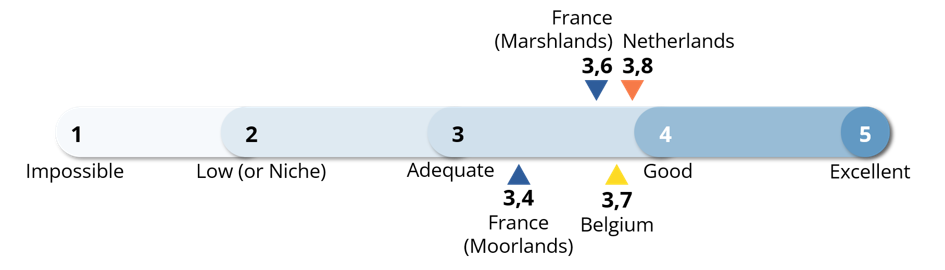
Extensive livestock: good feasibility
Most peatland-based cattle farming systems in western France are already extensive whereas intensive systems currently dominate in Flanders and the Netherlands. Amid a crisis in generational succession, the least productive marshland and heathland areas are the first to be abandoned. This is particularly challenging in France. Conversely, the higher cost of land in Flanders and the Netherlands acts as a barrier to the transition to lower livestock densities.
In all the regions studied, extensive livestock farming in wetlands can build on existing farm assets, including farmers’ know-how, equipment, infrastructure and established value chains, while delivering strong technical and economic performance.
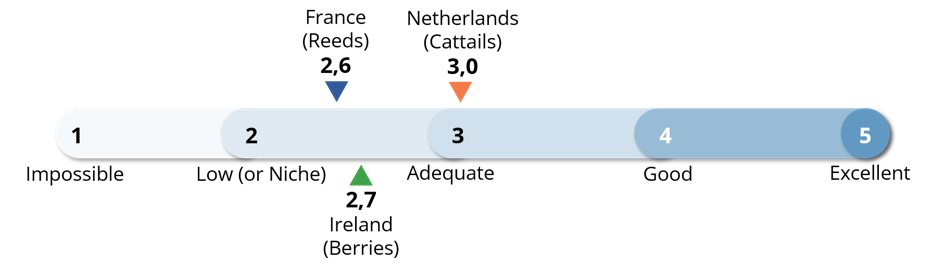
Paludiculture crops: low or niche feasibility
Paludiculture encompasses both the harvesting of natural wetland vegetation and the cultivation of wetland crops. Reed harvesting has a long tradition in France but is currently in decline. By contrast, the cultivation of paludiculture crops such as cattails and berries on rewetted peatlands is still at an early stage in North-West Europe.
As it remains largely experimental, its technical performance is still uncertain, and the business model lacks legal and stakeholders’ recognition. Two factors are also currently limiting the economic viability of the model:
· The lack a structured value chain makes it difficult to identify profitable market outlets.
· The high investment costs associated with hydrological works.
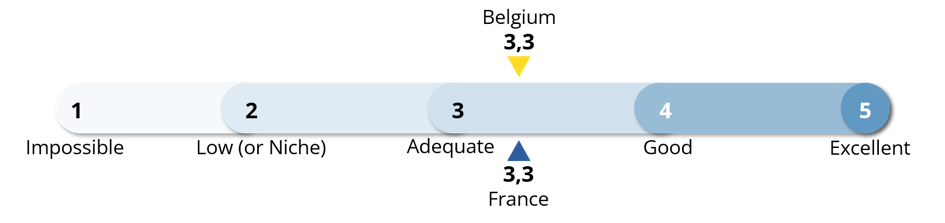
Payment for ecosystem services: adequate feasibility
Most of the necessary ingredients for the successful development of payments for ecosystem services are already in place. However, a critical major source of uncertainty remains: the scale and long-term sustainability of funding sources.
This question applies to both public and private funding. How much funding will remain for the AEMCs in the next CAP programmes? Will there be enough private investors willing to provide significant funding for environmental projects?
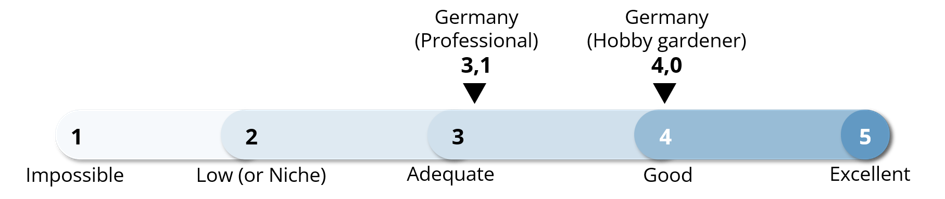
Peat free substrates: good feasibility
There appear to be sufficient deposits of alternative materials in Europe to replace peat in growing media. However, most alternatives cannot fully match the physical properties of peat.
This makes the transition challenging for professional growers, who are highly dependent on agronomic performance and may need to adapt their practices, particularly irrigation and fertilisation, when switching to peat-free growing media. Conversely, the transition should be easier for hobby gardeners, as they are generally less concerned with the technical performance of their growing media.
To learn more
For more information, these factsheets summarise the feasibility analysis for each pilot region and business model:
Or read the full report here:
BUFFER+ WP2 factsheets:
CONCEPT Typha factsheet