
The BUFFER+ project partners are pleased to share the “feasibility study for sustainable value chains in peatlands”. This paper assesses the level of feasibility of different business models which could have good potential for generating income in peatland areas while respecting their ecosystem functions.
Why rethink our economic practices in peatlands?
Functional peatlands are unique ecosystems capable of providing a wide range of ecosystem services. Yet, they face alarming levels of degradation primarily driven by land-use changes and different economic activities like intensive agriculture, turf cutting or forestry. The feasibility of developing sustainable business models in peatland areas is therefore a strategic issue.
What is the goal of this study?
The goal of this study is to identify value-creating activities that strike a good balance between environmental footprint and business viability. It also needs to address the needs and concerns of local stakeholders. It aims to identify which business models have the most potential and to explore how they can be supported and scaled up in the different pilot regions of the project. Conversely, this study can help discern insurmountable barriers for certain business models, rendering short-term pursuit impractical. The following models have been studied:
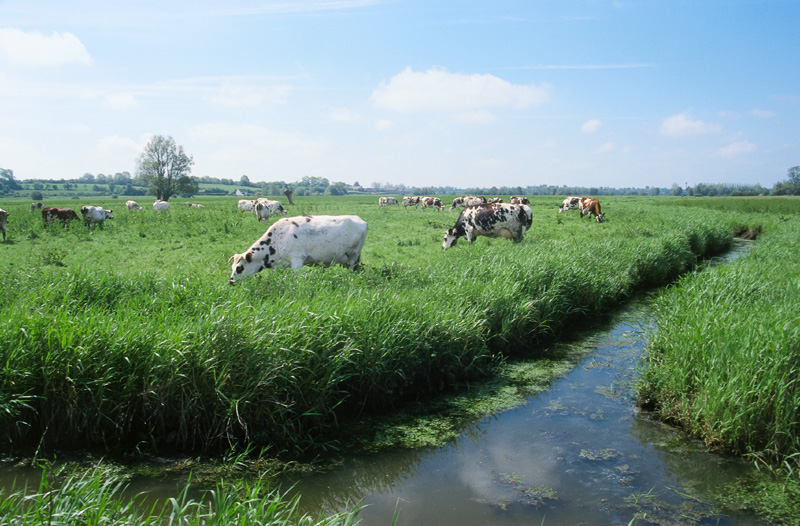
- Extensive grazing (for both dairy and meat production)
- Paludiculture (berries, cattails, reeds…)
- Payment for ecosystem services
- Peat-free potting soil production
How was this study conducted?
For each business model in each pilot region, the BUFFER+ partners targeted 7 sub-areas of study that can reveal the various strengths and barriers associated with the deployment of these economic models. These areas of study include value chain capacity, social and political acceptability, long-term prospects, technical feasibility, economic viability, model sustainability and temporal feasibility.
What are the overall results?
The results of the study demonstrate that all the business model studied have an acceptable to high level of feasibility. However, significant barriers were identified for each of them:
- Extensive grazing faces a lack of attractiveness in a context of high retirement rates of livestock farmers, which is causing the sector to shrink.
- Paludiculture is in its infancy and suffers from the absence of remunerative and structured value chains.
- Payments for environmental services are highly dependent on the willingness of stakeholders to commit.
- Peat-free soils are generally less effective in agronomic and economic terms than peat.
For more information on the feasibility of these economic models in their local context and across north-western Europe, you can access the full study by clicking the button bellow: